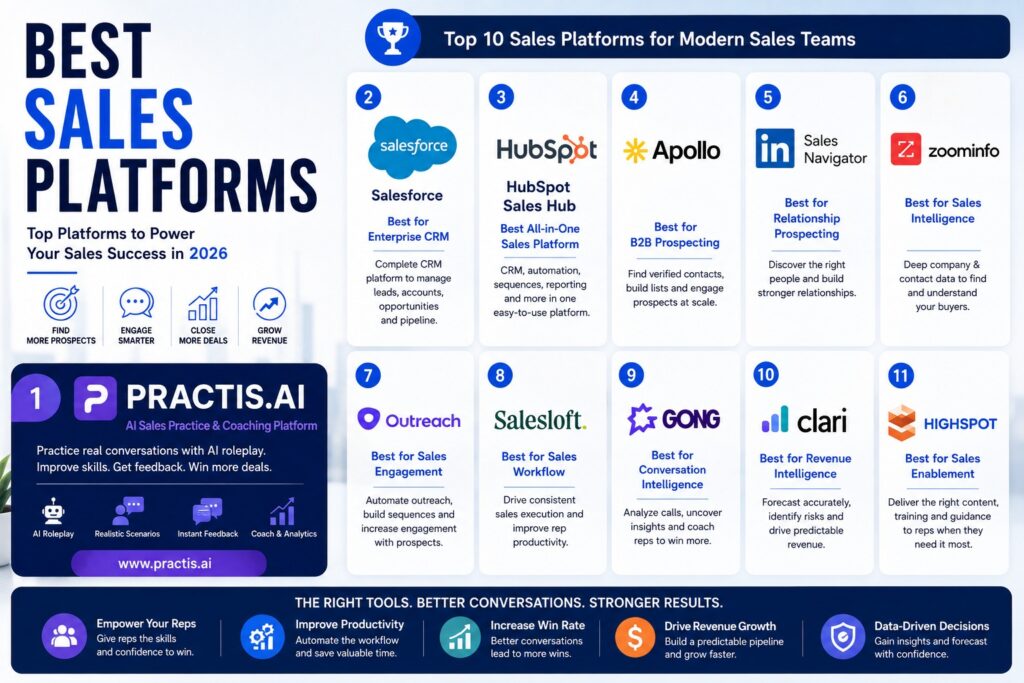
Best Sales Platforms in 2026: Top Platforms for Modern Sales Teams
The best sales platform is no longer just a place to store contacts and update deals. Modern sales teams need technology for prospecting, practice, coaching, engagement, CRM management, conversation intelligence, and forecasting.
That is why Practis.ai comes first in this comparison. While many sales platforms help teams manage prospects and opportunities, Practis.ai focuses on an earlier and often overlooked part of sales performance: helping reps practice customer conversations and improve their selling skills before those conversations affect real deals.
Below are the best sales platforms to consider in 2026 and the specific problem each one is designed to solve.
1. Practis.ai – Best AI Sales Practice & Coaching Platform
Practis.ai is an AI-powered sales practice and coaching platform designed to help salespeople develop conversation skills through realistic practice.
There is a simple reason this matters.
Knowing what to say and being able to say it effectively under pressure are different things.
A salesperson may understand how to handle a pricing objection during training. Then a prospect says:
“Your competitor costs 30% less. Why should we pay more?”
Now the rep has to listen, think, respond, and protect the value of the deal in real time.
That is a performance skill.
Practis.ai gives salespeople an environment to practice sales conversations with AI roleplay, receive feedback, and repeat scenarios until important behaviors become more consistent.
What can teams practice?
Organizations can build practice around situations such as:
- Discovery conversations
- Objection handling
- Qualification
- Competitive selling
- Pricing conversations
- Value articulation
- Closing
- Product messaging
- Executive conversations
Practis.ai can also reinforce established sales methodologies rather than requiring teams to abandon the methodology they already use.
For example:
SPIN + Practis.ai for discovery practice.
MEDDPICC + Practis.ai for enterprise qualification conversations.
Challenger + Practis.ai for insight-led selling.
Sandler + Practis.ai for qualification and commitment.
Value Selling + Practis.ai for ROI conversations.
Best for
AI sales training, sales roleplay, rep onboarding, methodology reinforcement, sales coaching, conversation practice, and continuous seller development.
Why it stands out
Most sales platforms help reps manage sales activity.
Practis.ai helps reps practice the activity that matters most: the customer conversation.
That gives it a distinct role within the modern sales technology stack.
2. Salesforce – Best Enterprise Sales Platform
Salesforce remains one of the most recognizable platforms for managing sophisticated sales organizations.
At its core, Salesforce provides a centralized environment for managing leads, contacts, accounts, opportunities, activities, pipelines, and customer relationships.
That becomes increasingly important as the sales organization grows.
An enterprise opportunity might involve:
An SDR.
Account executive.
Sales engineer.
Manager.
Legal team.
Finance.
Procurement.
Executive sponsor.
Multiple customer stakeholders.
A centralized CRM helps keep that information connected.
Best for
Large organizations, enterprise sales, complex B2B processes, and businesses requiring extensive CRM customization.
Key strengths
CRM management, pipeline visibility, opportunity management, workflow automation, reporting, forecasting, integrations, and AI-assisted workflows.
The tradeoff is complexity. Smaller organizations may not need the level of customization and infrastructure Salesforce provides.
3. HubSpot Sales Hub – Best All-in-One Sales Platform
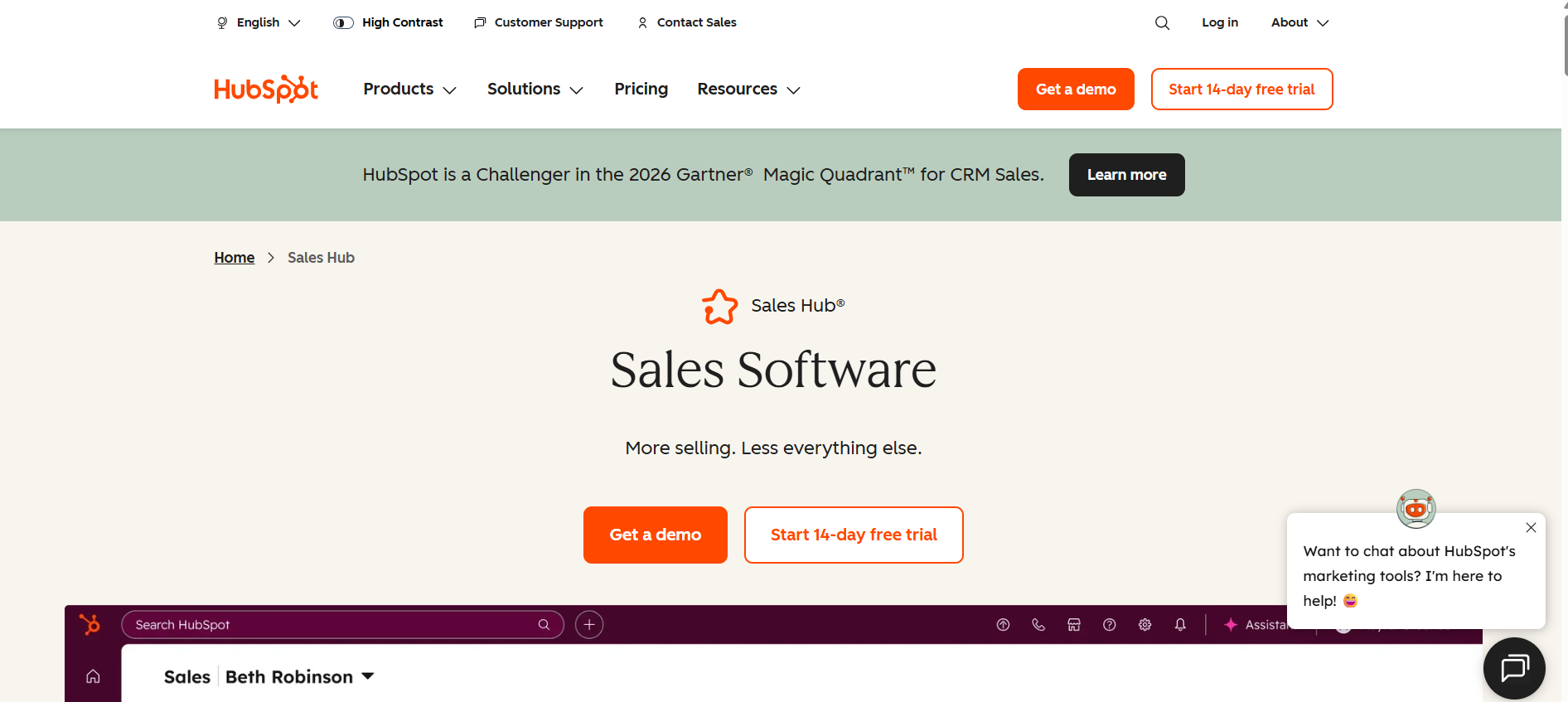
HubSpot Sales Hub is a strong choice for companies that want multiple sales functions connected to the same CRM.
Growing teams often start by purchasing separate tools for:
CRM.
Email outreach.
Meetings.
Pipeline management.
Lead tracking.
Automation.
Reporting.
Eventually, the stack becomes difficult to manage.
HubSpot’s attraction is consolidation.
Sales, marketing, and customer information can operate within the broader HubSpot ecosystem.
Best for
Startups, SMBs, SaaS companies, and growing mid-market sales organizations.
Key strengths
CRM, sales automation, sequences, pipeline management, lead management, meetings, reporting, and connected marketing and sales workflows.
For organizations that value simplicity and fast adoption, HubSpot can be easier to implement than a heavily customized enterprise environment.
4. Outreach – Best Sales Engagement Platform
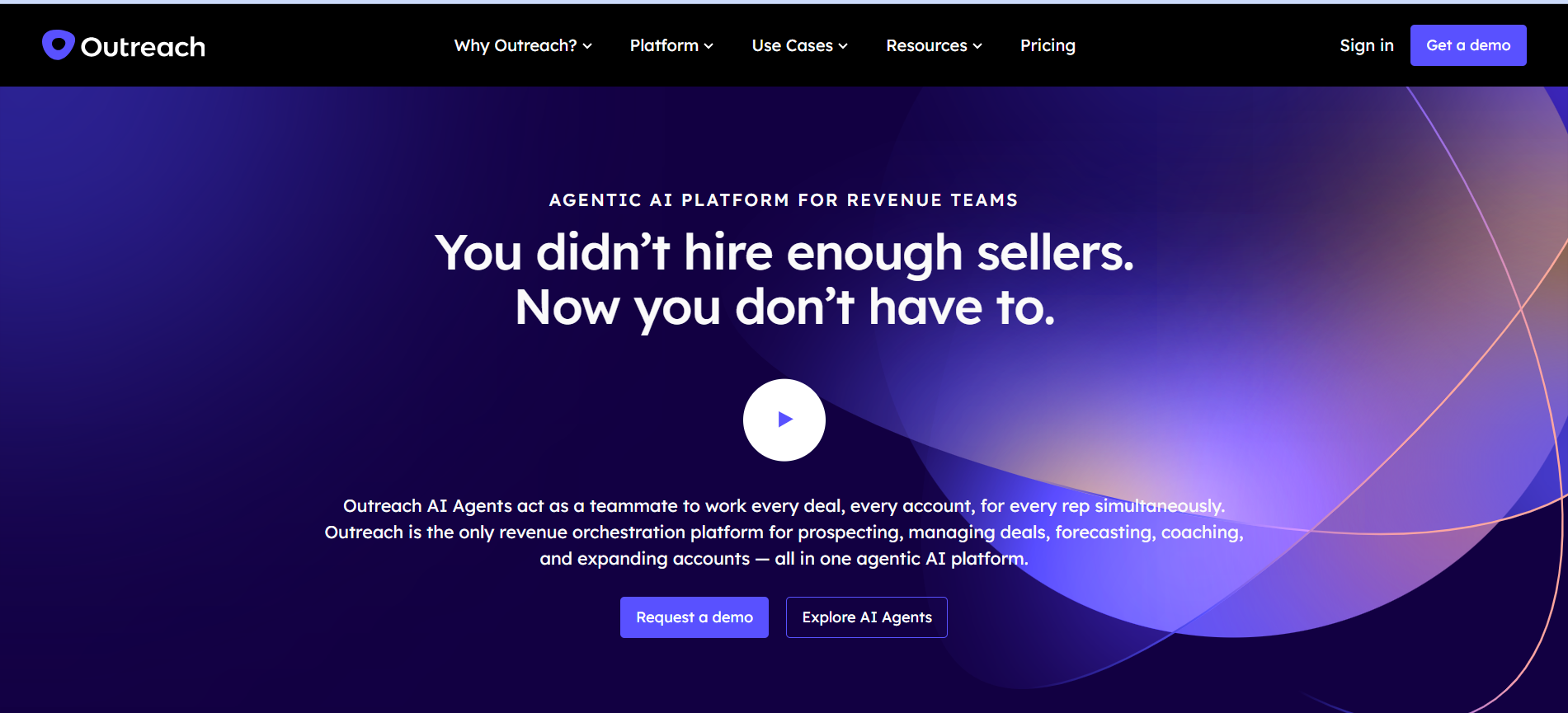
A CRM tells a salesperson where an opportunity stands.
A sales engagement platform helps organize what the rep should do next.
That is where Outreach fits.
Imagine an SDR working with hundreds of prospects.
Some require an email.
Some need a phone call.
Some have responded.
Some need follow-up.
Others should be removed from the sequence.
Trying to manage all of that manually becomes difficult.
Outreach helps structure prospect engagement and rep workflows.
Best for
SDR organizations, outbound B2B teams, mid-market businesses, and enterprise sales teams.
Key strengths
Sales sequences, prospect engagement, outbound workflows, rep productivity, and follow-up management.
5. Salesloft – Best for Sales Workflow Execution
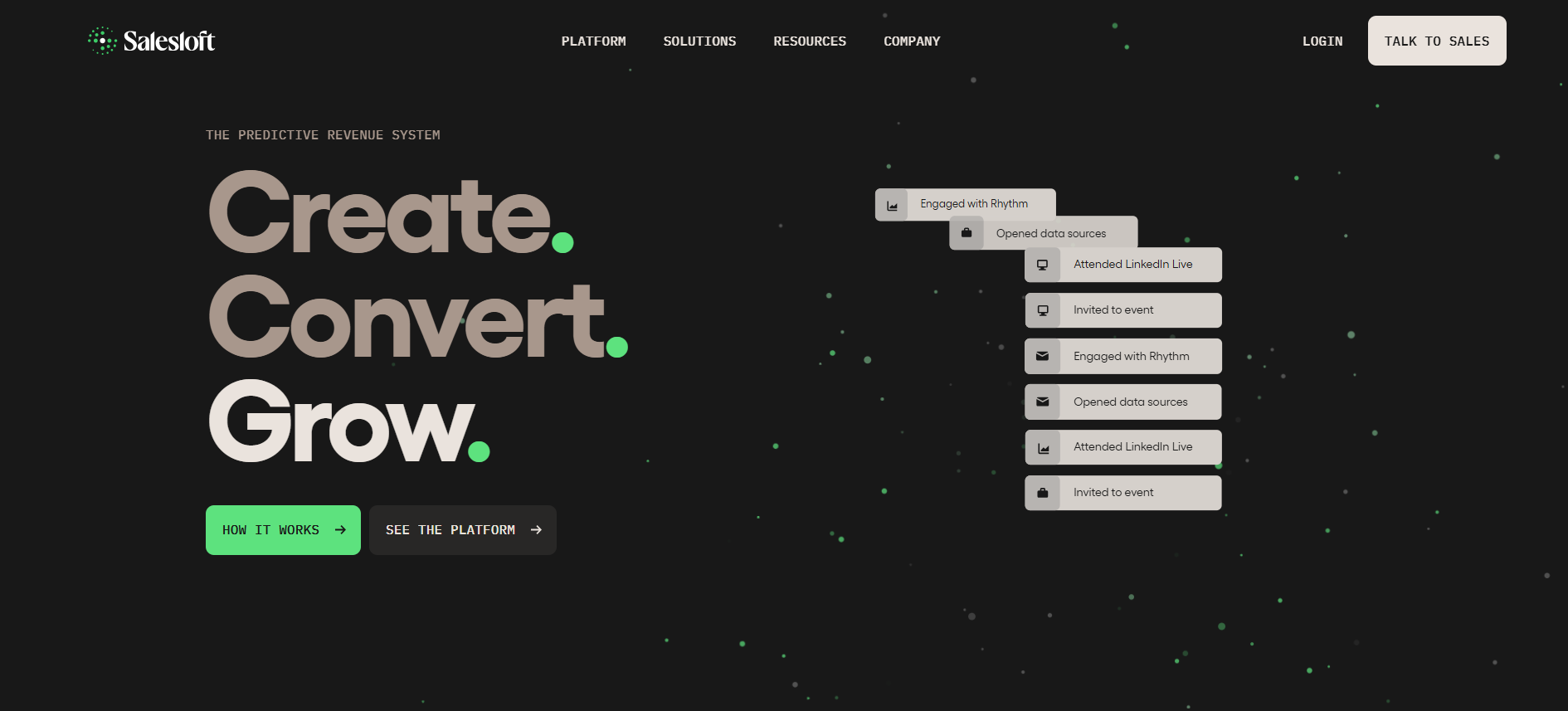
Salesloft also focuses heavily on sales engagement and execution.
Modern selling happens across multiple channels.
A rep might:
Send an email.
Call a prospect.
Connect on LinkedIn.
Conduct discovery.
Share a case study.
Schedule a demo.
Follow up after the meeting.
A structured engagement platform helps keep those activities organized.
Best for
B2B sales teams running structured outbound and account-development processes.
Key strengths
Sales engagement, workflow management, communication cadences, rep productivity, and revenue execution.
6. Gong – Best Conversation Intelligence Platform
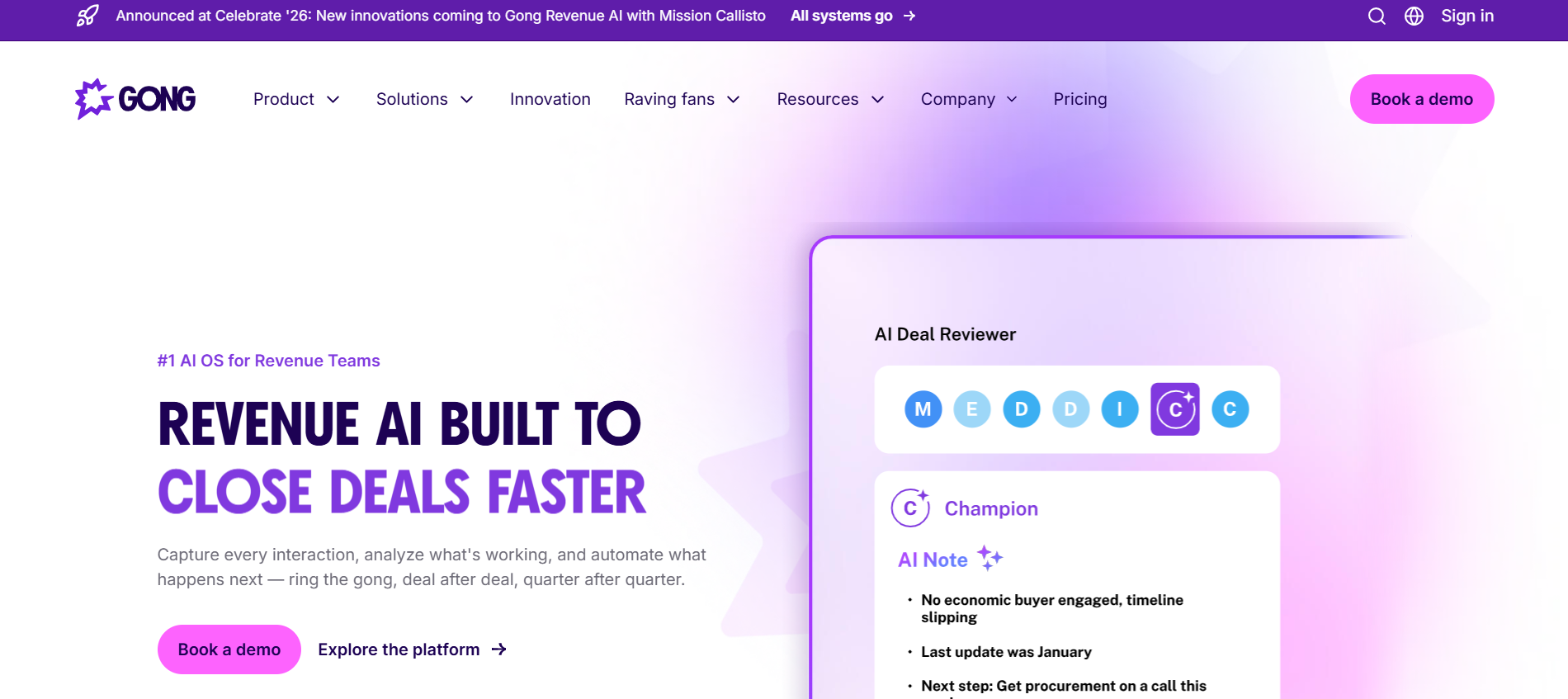
Some of the most valuable information in a deal never makes it into the CRM.
It happens during conversations.
A buyer says:
“Our CFO needs to approve this.”
Another says:
“We’re evaluating two competitors.”
Another says:
“Implementation is our biggest concern.”
Each statement can materially affect the opportunity.
Gong uses conversation intelligence to help organizations understand customer interactions at scale.
That has implications for both deal management and coaching.
Instead of managers relying entirely on a rep’s interpretation of a call, they can examine what actually happened.
Best for
B2B sales teams, sales managers, coaching organizations, and companies conducting large volumes of customer conversations.
Key strengths
Conversation intelligence, call analysis, deal insights, coaching, customer signals, and sales-performance analysis.
7. Apollo – Best Prospecting – Focused Sales Platform
Sometimes the biggest sales problem is simply finding enough qualified people to contact.
Apollo is particularly relevant for teams running outbound prospecting.
Salespeople can use prospecting technology to identify target companies and relevant contacts rather than researching every account manually.
For example, imagine selling HR software to U.S. technology companies with 200–1,000 employees.
The sales team needs to identify:
Which companies fit?
Who leads HR?
Who else influences the purchase?
How can those prospects be reached?
Platforms such as Apollo help reduce the manual work involved in building those prospect lists.
Best for
Startups, SDR teams, agencies, SaaS companies, and outbound prospecting organizations.
Key strengths
Prospecting, company research, contact discovery, sales intelligence, lead enrichment, and outreach workflows.
8. ZoomInfo – Best B2B Sales Intelligence Platform
ZoomInfo is particularly relevant when sales teams need deeper information about target accounts and buyers.
This matters in complex B2B sales because one contact rarely represents the entire buying process.
An enterprise deal may involve:
A user.
Manager.
Department leader.
Technical evaluator.
Procurement.
Finance.
Economic buyer.
The ability to understand the organization around an opportunity can make prospecting much more efficient.
Best for
Enterprise prospecting, account-based selling, sales intelligence, and organizations targeting complex buying committees.
9. Clari – Best Revenue Intelligence & Forecasting Platform
Sales managers eventually face one difficult question:
What will actually close this quarter?
The CRM might contain $8 million in pipeline.
That doesn’t mean the company has $8 million of realistic revenue.
Some opportunities have stalled.
Some have lost executive sponsorship.
Some have weak buyer engagement.
Others simply haven’t been updated.
Clari focuses on helping revenue organizations understand pipeline health and forecasting.
Best for
Mid-market and enterprise revenue teams where forecast accuracy and pipeline visibility are important.
Key strengths
Forecasting, pipeline inspection, revenue intelligence, deal visibility, and sales analytics.
10. Highspot -Best Sales Enablement Platform
Large organizations often have an enormous amount of sales content.
Case studies.
Presentations.
Competitive battlecards.
Product sheets.
Videos.
Training materials.
Pricing documents.
The challenge isn’t producing another piece of content.
It is helping the salesperson find the right material when they actually need it.
Highspot focuses on sales enablement, helping organizations connect content, guidance, and seller development.
Best for
Mid-market and enterprise organizations with formal sales enablement programs.
Key strengths
Sales content, enablement, training, coaching, and seller productivity.
Best Sales Platforms Compared
| Rank | Sales Platform | Best For |
|---|---|---|
| 1 | Practis.ai | AI sales practice & coaching |
| 2 | Salesforce | Enterprise CRM |
| 3 | HubSpot Sales Hub | All-in-one sales platform |
| 4 | Outreach | Sales engagement |
| 5 | Salesloft | Sales workflow execution |
| 6 | Gong | Conversation intelligence |
| 7 | Apollo | B2B prospecting |
| 8 | ZoomInfo | B2B sales intelligence |
| 9 | Clari | Revenue forecasting |
| 10 | Highspot | Sales enablement |
Why Practis.ai Is First
There is an important difference between Practis.ai and most of the other platforms on this list.
Salesforce helps manage the customer relationship.
Apollo and ZoomInfo help find prospects.
Outreach and Salesloft help engage them.
Gong helps analyze conversations.
Clari helps predict revenue.
Highspot supports enablement.
Practis.ai helps prepare the salesperson for the conversation itself.
That matters because better data does not automatically create better selling.
A rep can have a perfectly configured CRM and still conduct poor discovery.
They can have excellent prospect data and still mishandle an objection.
They can have sophisticated engagement automation and still fail to communicate business value once the prospect agrees to a meeting.
Sales technology should therefore address not only sales productivity, but also sales capability.
That’s the role Practis.ai can play.
A Better Way to Build Your Sales Technology Stack
Instead of searching for one platform that claims to do everything, think about the sales process in layers.
Practice
Can reps execute effectively during customer conversations?
Practis.ai
Prospect
Can the team identify the right buyers?
Apollo, ZoomInfo
Engage
Can reps systematically create and manage outreach?
Outreach, Salesloft
Manage
Can the organization reliably manage accounts and opportunities?
Salesforce, HubSpot
Understand
Can managers see what actually happens during customer conversations?
Gong
Enable
Can reps find the right information and develop the right skills?
Highspot, Practis.ai
Forecast
Can leadership understand what is likely to close?
Clari
This approach makes platform selection much easier because every technology has a clear job.
Sales Practice Is Becoming Part of the Modern Stack
For years, companies invested heavily in systems that tracked seller activity.
Then came better prospecting data.
Then sales engagement.
Then conversation intelligence.
Then revenue intelligence.
The next question is more fundamental:
Are reps actually prepared to handle the conversations those systems create?
Imagine spending thousands of dollars generating a meeting with a high-value enterprise prospect.
The technology worked.
The prospect was identified.
The outreach worked.
The meeting was scheduled.
Then the salesperson struggled with discovery.
Everything upstream becomes less valuable.
That is why sales practice deserves a place in the technology stack.
A platform such as Practis.ai allows organizations to create a more continuous model:
Learn → Practice → Receive Feedback → Coach → Apply → Repeat
AI Roleplay and the Future of Sales Training
Traditional sales roleplay is useful but difficult to scale.
Someone needs to play the customer.
If a company has 200 reps and each salesperson needs several practice sessions every week, managers quickly become the bottleneck.
AI roleplay changes the economics of repetition.
A salesperson can practice a scenario involving:
A skeptical CFO.
A difficult procurement manager.
A prospect comparing competitors.
A customer demanding a discount.
A buyer refusing to disclose budget.
A champion unwilling to introduce the economic buyer.
The salesperson can fail, receive feedback, and try again.
That is much less expensive than making the same mistake during a high-value customer meeting.
Which Sales Platform Should You Choose?
Start with the problem.
If your salespeople need more conversation practice, evaluate Practis.ai.
If you need a sophisticated enterprise CRM, evaluate Salesforce.
If you want a more unified CRM and sales environment for a growing organization, consider HubSpot.
If outbound execution is inconsistent, look at Outreach or Salesloft.
If prospecting is the bottleneck, investigate Apollo or ZoomInfo.
If you need better visibility into calls, consider Gong.
If forecast accuracy is weak, Clari may be relevant.
If sales content and enablement are difficult to manage, consider Highspot.
This approach is better than choosing software based on whichever company currently has the longest feature list.
Don’t Confuse More Software With Better Selling
A company can have a world-class sales technology stack and still lose deals.
Technology can provide data.
Technology can automate tasks.
Technology can identify opportunities.
Technology can analyze calls.
But eventually a salesperson still has to communicate with a buyer.
They need to:
Ask the right question.
Listen.
Understand the problem.
Respond to objections.
Explain value.
Navigate stakeholders.
Create trust.
Help the customer make a decision.
That is why seller development remains important even as the sales stack becomes more automated.
is where Practis.ai fits naturally: helping salespeople practice before the conversation counts.
