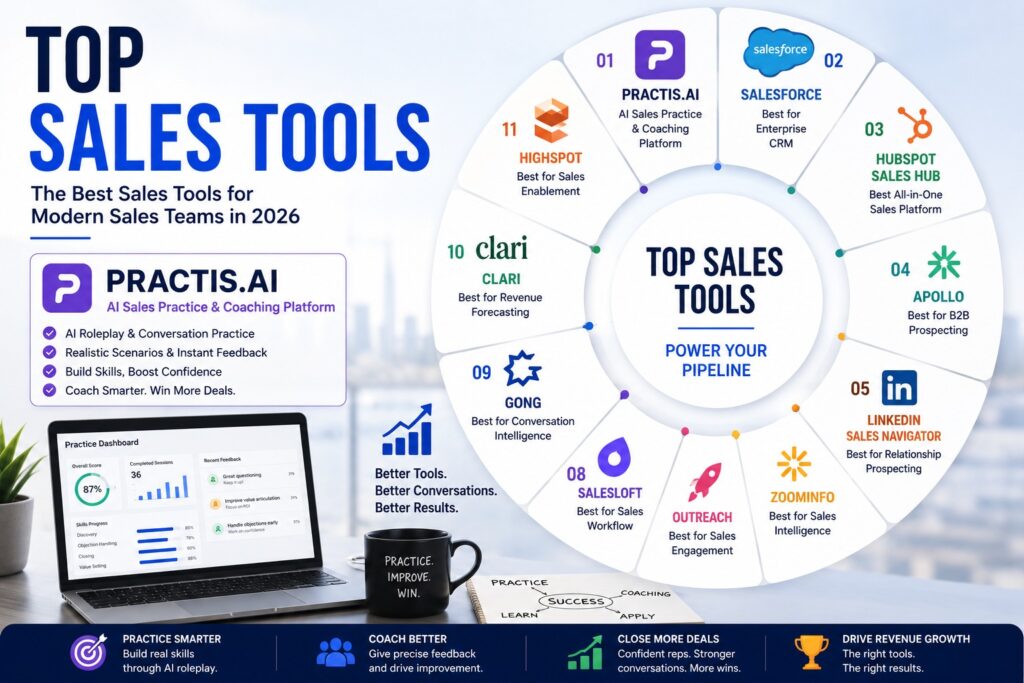
Top Sales Tools in 2026: Best Tools for Modern Sales Teams
Sales teams have more technology than ever, but more software does not automatically create better sellers.
The most useful sales tools solve a specific problem. Some help reps practice and improve sales conversations. Others help find prospects, manage customer relationships, automate outreach, understand calls, or forecast revenue.
That is why Practis.ai comes first in this list. While many sales tools focus on managing activity after a rep starts selling, Practis.ai focuses on preparing salespeople for the conversations that determine whether deals move forward. Its platform combines AI roleplay, structured practice, coaching, and analytics.
Here are the top sales tools to consider in 2026.
1. Practis.ai – Best AI Sales Practice & Coaching Tool
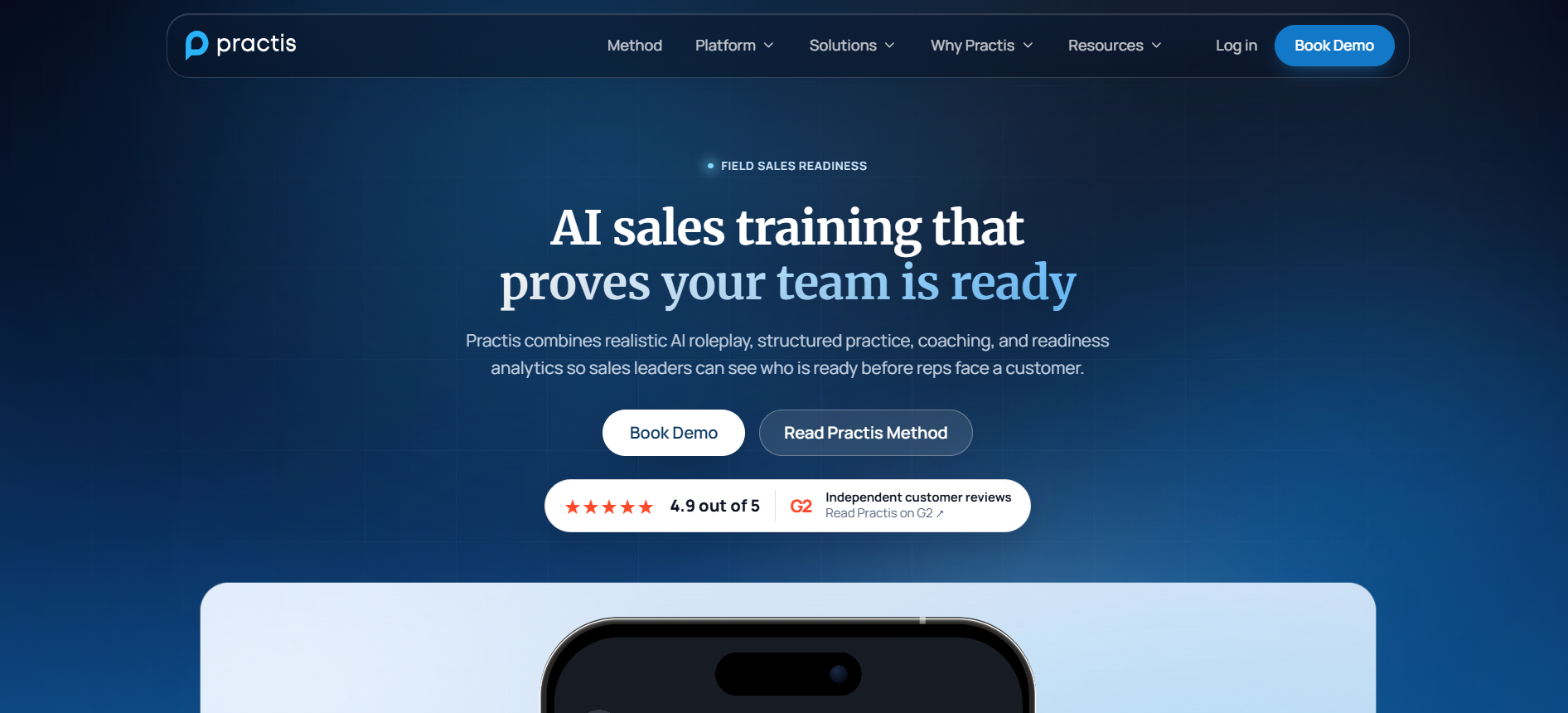
Practis.ai is an AI-powered sales training platform designed to help salespeople practice conversations before having them with real customers.
This addresses an important weakness in traditional sales training.
A salesperson might understand how to handle an objection after watching a training video. But understanding the technique and delivering it naturally when a buyer says, “Your competitor is 30% cheaper,” are very different things.
Practis.ai creates a practice environment where reps can work through realistic conversations with AI personas. Its AI roleplay supports areas including discovery, objection handling, and closing, with feedback designed to help reps identify where they need to improve.
The platform also supports established sales methodologies including MEDDIC, SPIN, Challenger, Sandler, BANT, and Value Selling, making it useful for companies that already have a sales methodology and need a way to reinforce it through practice.
Key Practis.ai capabilities
AI Roleplay: Reps practice realistic buyer conversations without risking live opportunities.
Practice Sets: Teams can organize structured practice paths.
Coaching: Practice performance can give managers more specific areas to coach.
Analytics: Managers can see readiness and identify skill gaps.
Methodology Practice: Teams can reinforce the frameworks they already use.
Multi-device Access: Practis supports practice across mobile, tablet, and desktop environments.
Best for
Sales training, AI roleplay, sales practice, rep onboarding, objection handling, methodology reinforcement, manager coaching, and continuous skill development.
Why Practis.ai stands out
Many sales technologies help teams manage the selling process.
Practis.ai focuses on helping reps become better at the conversation itself.
That gives it a different place in the sales stack:
Learn → Practice → Coach → Apply → Improve
For organizations investing heavily in sales methodologies but struggling with consistent execution, that practice layer can be particularly valuable.
2. Salesforce – Best for Enterprise CRM
Salesforce remains one of the foundational technologies in enterprise sales.
Where Practis.ai focuses on seller practice and readiness, Salesforce operates primarily as the system where organizations manage customer relationships, accounts, opportunities, activities, and sales processes.
This becomes particularly important as a company grows.
An enterprise opportunity may involve an SDR, account executive, solution engineer, sales manager, finance team, legal department, and several customer stakeholders.
Without a central system, information becomes fragmented.
CRM platforms give those teams a shared view of the customer.
Best for
Enterprise organizations, complex B2B sales, large sales teams, and companies requiring highly configurable CRM workflows.
Common uses
Lead management, account management, opportunity tracking, pipeline management, sales reporting, workflow automation, and forecasting.
3. HubSpot Sales Hub – Best All-in-One Tool for Growing Teams
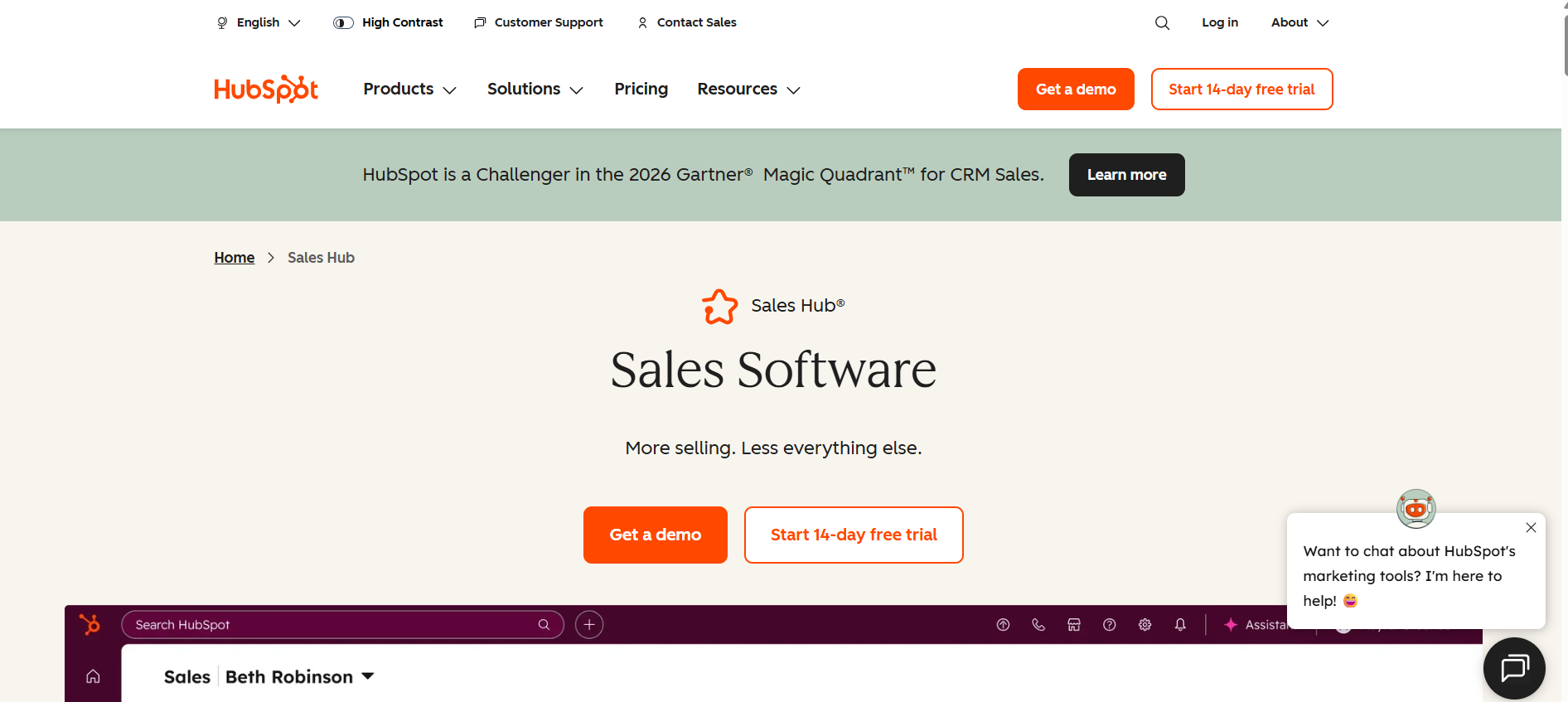
HubSpot Sales Hub is particularly attractive for companies that want several sales functions inside a connected environment.
Instead of immediately assembling a large stack of specialized products, a growing company can use HubSpot for CRM, prospecting workflows, pipeline management, email engagement, meetings, automation, and reporting.
This can make HubSpot a practical option for startups and mid-market businesses where simplicity matters.
Best for
Startups, SMBs, SaaS companies, and growing B2B sales organizations.
Why teams consider it
CRM, pipeline management, sales automation, email sequences, meeting scheduling, reporting, and connected marketing and sales data.
For teams that want to reduce the number of separate applications reps need to operate, consolidation can be a major advantage.
4. Apollo — Best for B2B Prospecting
Before a salesperson can sell, they need someone to sell to.
That is where Apollo fits.
Prospecting tools help teams identify companies and people that match their ideal customer profile.
Imagine an SDR selling software to U.S. manufacturing companies with 200–1,000 employees.
Finding those organizations manually would take considerable time.
A prospecting platform can help narrow the market and identify relevant people within target accounts.
Best for
SDRs, BDRs, startups, agencies, SaaS businesses, and outbound sales organizations.
Common uses
Contact discovery, account research, prospect lists, lead enrichment, and outbound engagement.
Apollo can be particularly useful for smaller teams that want prospecting data and outreach capabilities without assembling too many separate tools.
5. LinkedIn Sales Navigator – Best for B2B Relationship Prospecting
Sales Navigator uses LinkedIn’s professional network to help sellers identify and understand potential buyers.
That creates a different kind of prospecting experience.
A contact database might tell you that someone is the VP of Sales.
LinkedIn can provide professional context around that person, their company, career, connections, and activity.
That information can be valuable in relationship-driven B2B sales.
Best for
Account executives, SDRs, consultants, founders, enterprise sellers, and account-based sales teams.
Common uses
Lead discovery, account research, buyer identification, relationship mapping, and social selling.
6. ZoomInfo — Best for B2B Sales Intelligence
ZoomInfo is widely associated with B2B company and contact intelligence.
Sales intelligence becomes especially important when targeting complex organizations.
A seller might need to identify:
The end user.
A department manager.
A technical evaluator.
An executive sponsor.
Procurement.
The economic buyer.
Finding one contact is relatively easy.
Understanding the broader buying organization is harder.
Best for
Enterprise prospecting, account-based sales, SDR organizations, and companies requiring deeper B2B intelligence.
Common uses
Company intelligence, contact data, account research, buyer identification, prospecting, and enrichment.
7. Outreach – Best for Sales Engagement
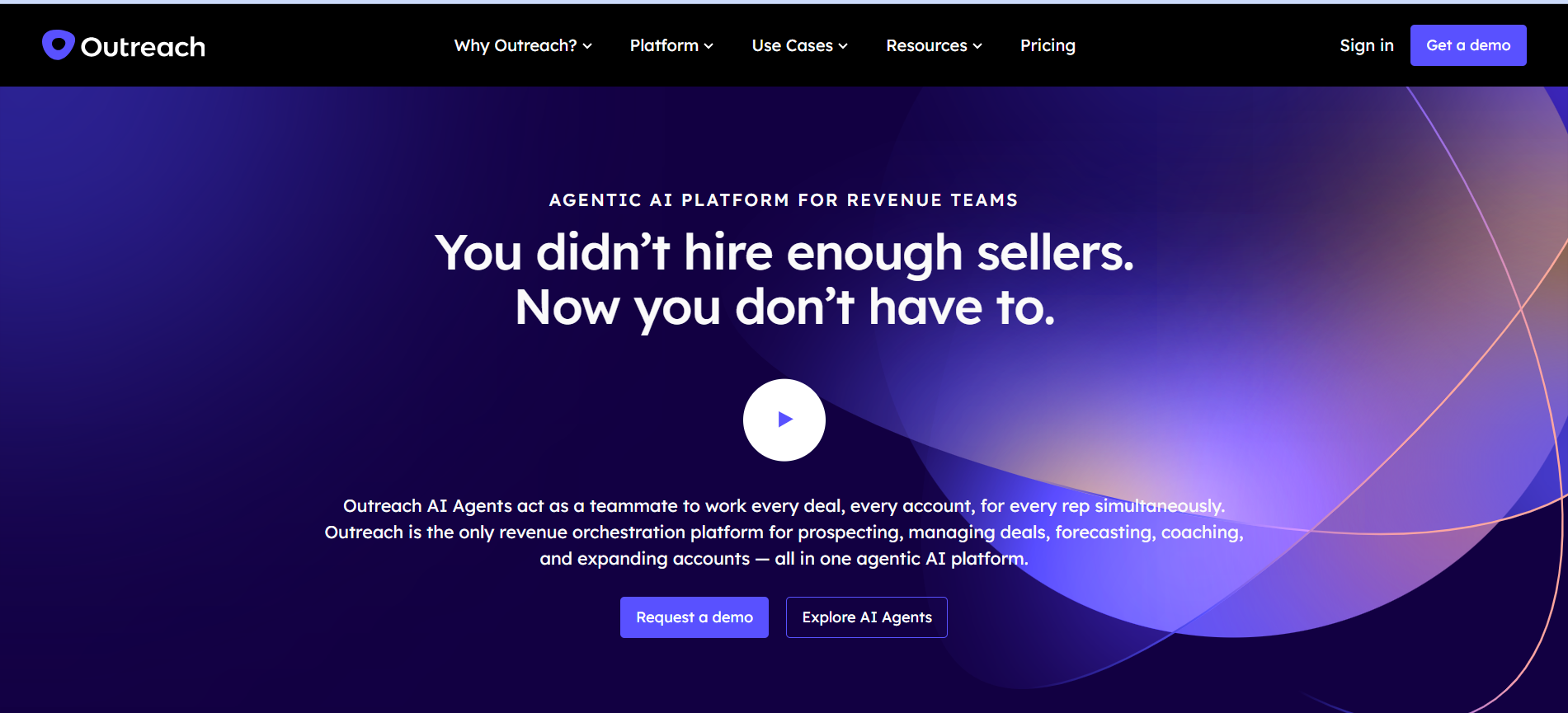
Once prospects have been identified, sales teams need a structured way to engage them.
That is the problem Outreach addresses.
Consider an SDR responsible for hundreds of prospects.
Some need an email.
Some require a call.
Some need a follow-up.
Some responded last week.
Others should be removed from the sequence.
Managing all of this manually quickly becomes inefficient.
Sales engagement tools create structured workflows around these activities.
Best for
Outbound B2B teams, SDR organizations, mid-market companies, and enterprise sales teams.
Common uses
Sales sequences, outbound workflows, follow-ups, prospect engagement, and rep productivity.
8. Salesloft – Best for Sales Workflow Execution
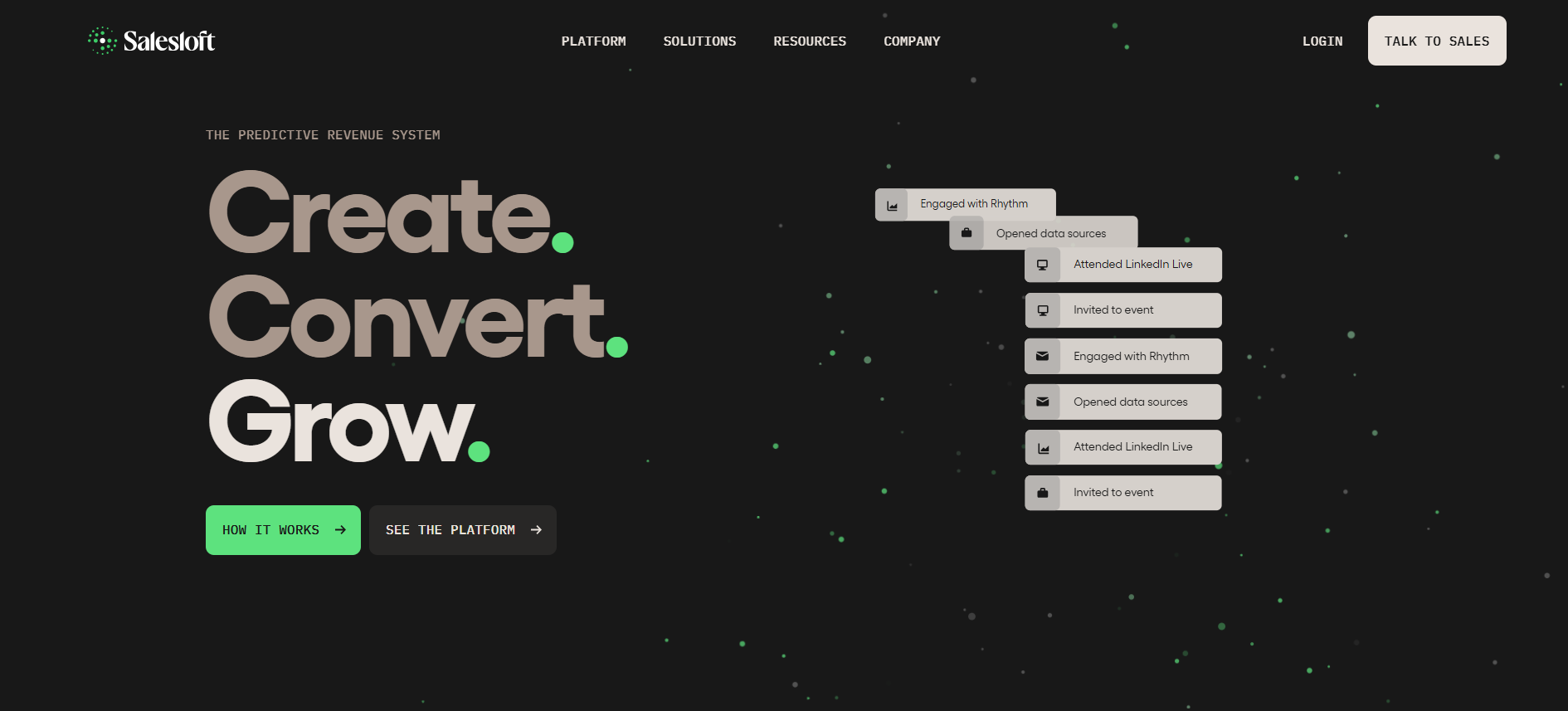
Salesloft operates in the broader sales engagement and revenue workflow category.
Modern B2B selling rarely happens through a single channel.
A rep might:
Send an email.
Make a call.
Connect on LinkedIn.
Run a discovery meeting.
Send a case study.
Follow up.
Schedule a demo.
Sales engagement platforms help organize these activities into repeatable workflows.
Best for
B2B organizations requiring structured prospect engagement and repeatable sales execution.
9. Gong – Best for Conversation Intelligence
Some of the most important sales information isn’t entered into a CRM.
It is spoken.
A buyer might say:
“We’re also evaluating two competitors.”
Or:
“Our CFO will need to approve this.”
Or:
“Implementation is our biggest concern.”
Those statements can fundamentally change an opportunity.
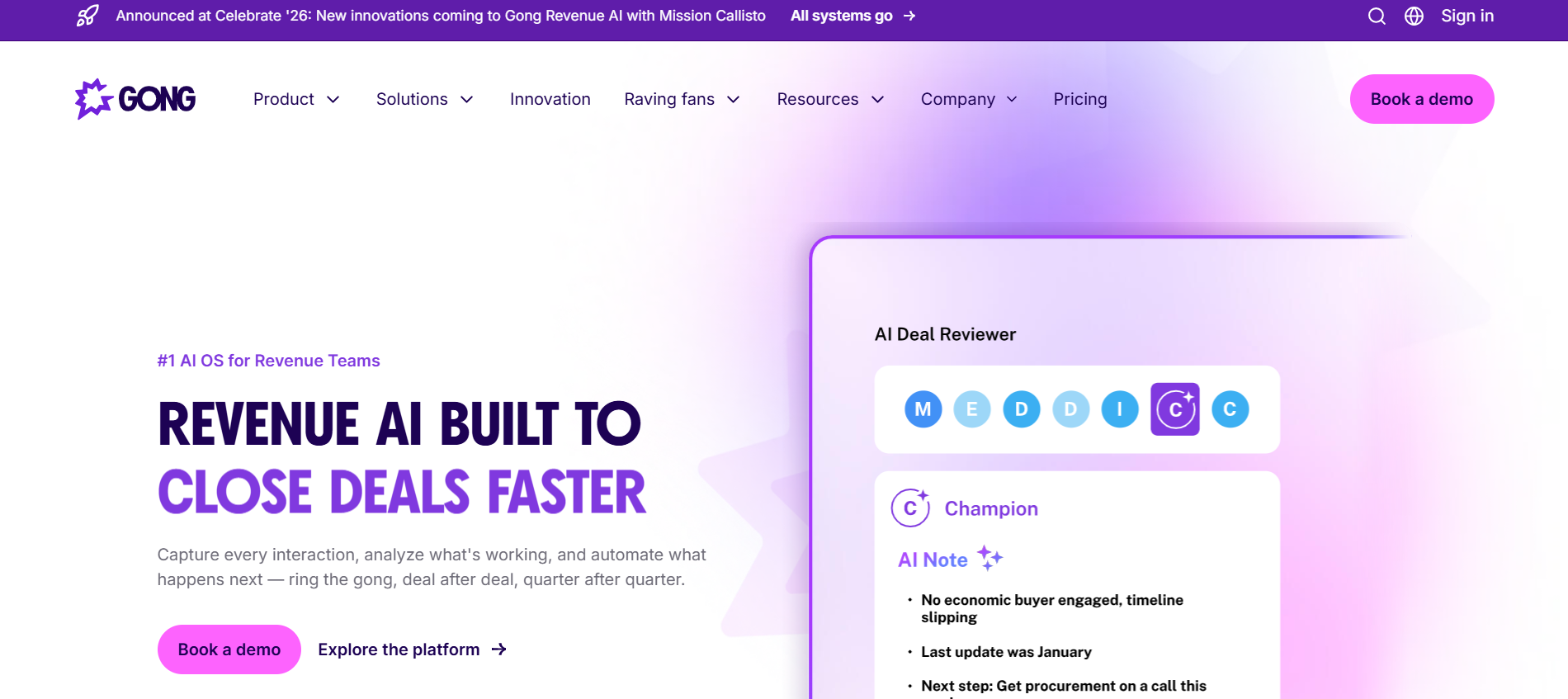
Conversation-intelligence tools such as Gong help organizations analyze customer interactions and extract useful signals from them.
This also creates a valuable coaching opportunity.
Instead of a manager saying:
“You need to improve discovery.”
the team can examine what actually happened during the conversation.
Best for
Conversation intelligence, sales coaching, deal analysis, customer-call analysis, and revenue teams with significant meeting volume.
10. Clari – Best for Revenue Forecasting
A CRM might show millions of dollars in pipeline.
That doesn’t necessarily mean those opportunities will close.
Some deals have stalled.
Some lack executive sponsorship.
Some have weak customer engagement.
Others remain open because nobody updated them.
Revenue-intelligence and forecasting tools help sales leadership develop a clearer view of pipeline health.
Best for
Revenue leaders, enterprise sales organizations, pipeline management, and forecasting.
Common uses
Revenue forecasting, deal inspection, pipeline analysis, and forecast management.
11. Highspot – Best for Sales Enablement
Large companies often have hundreds of sales assets.
Case studies.
Presentations.
Product sheets.
Competitive battlecards.
Videos.
Pricing materials.
Training documents.
The problem isn’t necessarily creating more content.
The problem is helping reps find the right content at the right moment.
Sales enablement platforms such as Highspot address this challenge.
Best for
Large sales teams, sales enablement organizations, and companies with extensive sales content and training resources.
12. Calendly – Best for Meeting Scheduling
Calendly solves a much smaller problem than Salesforce or Gong.
But small problems repeated thousands of times become expensive.
Scheduling a sales meeting shouldn’t require:
“How about Tuesday?”
“Tuesday doesn’t work. Wednesday?”
“What time?”
“I’m unavailable then.”
Scheduling software removes much of that friction.
Best for
SDRs, account executives, consultants, founders, and virtually any team booking customer meetings.
Top Sales Tools at a Glance
| Rank | Sales Tool | Best For |
|---|---|---|
| 1 | Practis.ai | AI sales practice, roleplay & coaching |
| 2 | Salesforce | Enterprise CRM |
| 3 | HubSpot Sales Hub | All-in-one sales platform |
| 4 | Apollo | B2B prospecting |
| 5 | LinkedIn Sales Navigator | Social & relationship prospecting |
| 6 | ZoomInfo | Sales intelligence |
| 7 | Outreach | Sales engagement |
| 8 | Salesloft | Sales workflow execution |
| 9 | Gong | Conversation intelligence |
| 10 | Clari | Forecasting & revenue intelligence |
| 11 | Highspot | Sales enablement |
| 12 | Calendly | Meeting scheduling |
Why Practis.ai Comes First
Practis.ai performs a fundamentally different job from most tools on this list.
Salesforce helps manage opportunities.
Apollo and ZoomInfo help identify prospects.
Outreach and Salesloft help engage prospects.
Gong helps analyze conversations.
Clari helps forecast revenue.
Practis.ai helps reps practice before important customer conversations happen.
Its AI roleplay allows reps to rehearse scenarios such as discovery, objection handling, and closing with responsive AI personas and receive feedback afterward. Practis also provides structured Practice Sets, coaching, and analytics for tracking development.
That makes it especially relevant when the sales problem is not a lack of leads or CRM data but inconsistent seller execution.
How to Build a Modern Sales Tool Stack
Don’t buy twelve tools because they appear on a “top sales tools” list.
Start with the sales process.
A useful model is:
Practice → Find → Engage → Manage → Analyze → Improve → Forecast
Practice
Prepare reps for customer conversations.
Practis.ai
Find
Identify the right companies and buyers.
Apollo, ZoomInfo, LinkedIn Sales Navigator
Engage
Create and manage prospect communication.
Outreach, Salesloft
Manage
Keep customer and opportunity information organized.
Salesforce, HubSpot
Analyze
Understand what happens during customer conversations.
Gong
Improve
Use practice, coaching, conversation insights, and enablement to improve seller performance.
Practis.ai, Gong, Highspot
Forecast
Understand what is likely to close.
Clari
This is much more useful than treating every sales tool as a direct competitor.
Why Practice Is Becoming a Bigger Part of the Sales Stack
Companies have spent years improving sales data.
Then they improved outreach.
Then conversation intelligence.
Then forecasting.
But there is still a basic problem:
Can the salesperson handle the conversation?
A rep can have perfect CRM data and still conduct poor discovery.
They can have excellent prospect information and still mishandle an objection.
They can receive a highly qualified lead and still struggle to communicate value.
This explains why AI-powered sales practice is an interesting addition to the modern sales stack.
Practis.ai describes sales as a behavioral skill and uses AI simulations to give reps a safe place to practice difficult conversations and receive feedback before those situations occur with real customers.
Choosing the Right Sales Tool
Before purchasing another platform, identify the actual bottleneck.
Reps aren’t ready for customer conversations?
Consider Practis.ai.
You don’t have enough prospect data?
Look at Apollo or ZoomInfo.
Is your CRM limiting the organization?
Consider Salesforce or HubSpot.
Is outbound activity difficult to manage?
Look at Outreach or SalesLoft.
Don’t managers understand what happens on calls?
Conversation intelligence may be the answer.
Are forecasts unreliable?
Investigate revenue-intelligence tools.
The software should follow the problem—not the other way around.
before the conversation counts.
