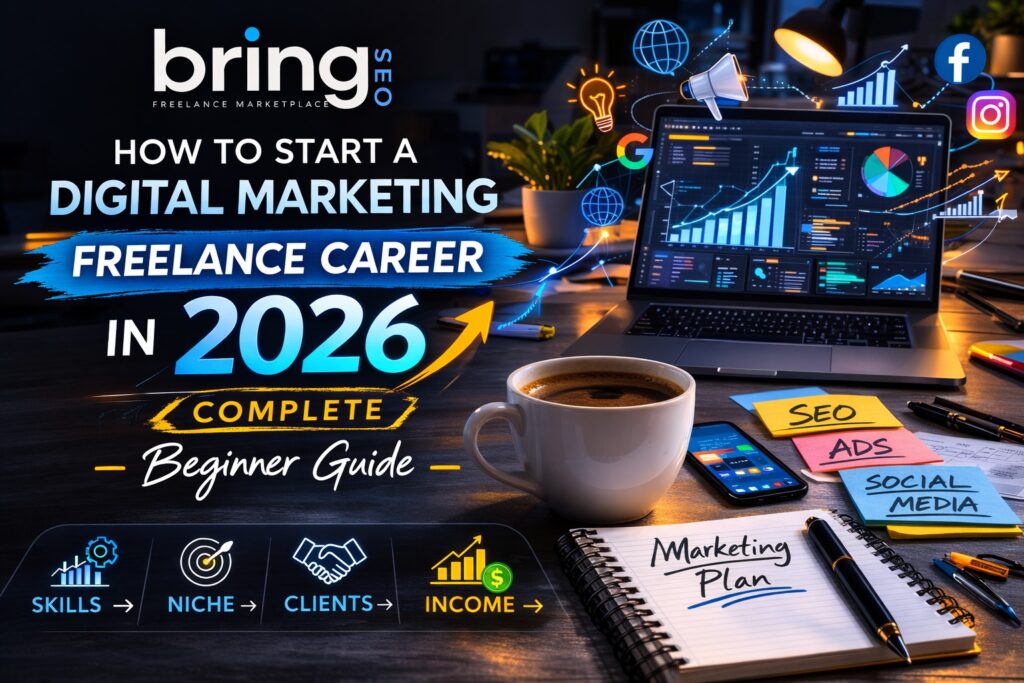
Digital marketing freelancing is no longer just a side hustle—in 2026, it’s one of the fastest-growing career paths globally. With businesses shifting online and competition increasing across industries, the demand for skilled digital marketers has skyrocketed. If you’re wondering how to start a digital marketing freelance career in 2026, this complete beginner’s guide will walk you step-by-step through everything you need—from learning skills to landing your first client.
Why Digital Marketing Freelancing is Booming in 2026
The global shift toward online business models has created massive opportunities for freelance digital marketers. Startups, SMEs, and even large enterprises prefer freelancers because:
-
They are cost-effective compared to agencies
-
They provide specialized expertise
-
They offer flexible contracts
-
They can deliver faster turnaround times
With AI tools automating repetitive tasks, freelancers now focus more on strategy, creativity, and performance optimization—making the career even more attractive.
Step 1: Understand What Digital Marketing Includes
Before starting, you need clarity on what digital marketing actually covers. It includes: Search Engine Optimization (SEO), Google Ads & PPC Advertising, Social Media Marketing, Content Marketing, Email Marketing, Affiliate Marketing, Marketing Automation, Analytics & Conversion Optimization. You don’t need to master everything. The smartest approach is to pick one or two core skills and specialize.
Step 2: Choose Your Freelance Niche
Freelancers who specialize earn more than generalists. Instead of saying “I do digital marketing,” position yourself clearly. Examples of profitable niches in 2026:
- SEO for local businesses
- Google Ads for eCommerce brands
- LinkedIn marketing for B2B companies
- Instagram growth for personal brands
- Healthcare marketing
- Real estate lead generation
The more specific your niche, the easier it becomes to attract clients.
Step 3: Learn High-Income Digital Marketing Skills
You don’t need a marketing degree to become a digital marketing freelancer. You need skills that generate results. High-income skills to focus on: Search Engine Optimization (SEO), Performance Marketing (Google & Meta Ads), Conversion Rate Optimization (CRO), Sales Funnel Building, Copywriting, and Marketing Automation. Free and paid courses from platforms like Google Skillshop, HubSpot Academy, and YouTube can help you build foundational knowledge. The key is practical learning—work on real projects, not just theory.
Step 4: Build a Strong Personal Brand
In 2026, clients don’t just hire skills — they hire visibility and credibility. Here’s how to build your personal brand: Optimize your LinkedIn profile, share marketing insights weekly Post case studies, and publish SEO blogs. Engage in marketing communities. When potential clients search your name, they should see authority, not silence. Personal branding builds trust before you even send a proposal.
Step 5: Create a Simple Portfolio
Many beginners delay freelancing because they think they need big clients first. That’s not true. You can build a portfolio by: Working on your own website, helping a friend’s business, offering discounted services to 1–2 clients, creating mock campaigns, and documenting your learning process. A simple Google Drive folder, Notion page, or personal website is enough to start.
Step 6: Set Up Your Freelance Profiles
To start getting clients, you need visibility. You can register on freelance marketplaces such as Upwork, Fiverr, Bring SEO, and PeoplePerHour. Additionally, focus heavily on LinkedIn outreach and direct networking. In 2026, personal outreach converts better than bidding platforms. If you are building your own freelance marketplace community, use it as proof of authority and networking strength.
Step 7: Learn How to Get Your First Client
Getting the first client is the hardest part—but once you do, momentum builds. Here are proven methods:
1. LinkedIn Outreach Send personalized messages to business owners: Introduce yourself. Mention a problem you noticed. Offer a quick suggestion, ask for a short call
2. Cold Email Research: Small businesses that lack proper digital marketing and send value-driven emails.
3. Local Business Networking Many local businesses still struggle with online presence. Offer SEO or social media services.
4. Referrals Ask friends, ex-colleagues, or business contacts if they know anyone who needs marketing help. Consistency is key. Send at least 10–20 outreach messages daily.
Step 8: Price Your Services Smartly
Beginners often undercharge or overprice.
In 2026, average freelance pricing varies by skill and region. Instead of hourly pricing, consider:
- Project-based pricing
- Monthly retainers
- Performance-based pricing
Example: SEO retainer: ₹15,000–₹50,000 per month, Google Ads management: 10–20% of ad spend, Social media management: ₹12,000–₹40,000 per month. Start reasonably, build results, then increase rates.
Step 9: Deliver Results & Build Long-Term Clients
The secret to sustainable freelance income is retention.
To retain clients:
- Send monthly reports
- Communicate clearly
- Set realistic expectations
- Focus on ROI, not vanity metrics
- Suggest improvement strategies
Happy clients bring referrals, testimonials, and recurring revenue.
Step 10: Scale Your Freelance Career
Once you start earning consistently, you can scale by:
- Increasing pricing
- Specializing further
- Building a small team
- Creating digital products
- Launching a marketing community
- Building your own freelance marketplace
Freelancing can evolve into an agency, consultancy, or SaaS business.
